
Why Castle Rock Asphalt Fails Faster Than Most People Expect (And How to Stop It)
Why Castle Rock Asphalt Fails Faster Than Most People Expect (And How to Stop It)
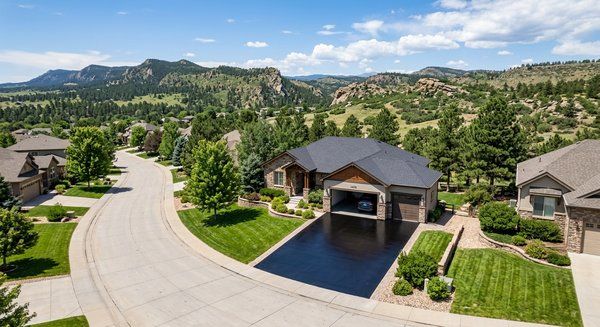
If your driveway or parking lot looks older than it actually is, you are not imagining things. Castle Rock, Colorado is one of the harshest environments for asphalt pavement in the entire country, and most property owners have no idea why their surfaces are cracking, crumbling, and sinking ahead of schedule. The culprits are not just heavy traffic or cheap materials. They are baked into the local geology, climate, and altitude itself.
Harris Asphalt Paving works with residential and commercial clients throughout Castle Rock and the broader Front Range, and the team sees the same patterns of premature asphalt failure over and over again. The good news is that understanding what is actually destroying your pavement is the first step toward stopping it.
Nature's Symphony
The 120-Day Freeze-Thaw Cycle Is Wrecking Your Pavement From the Inside
Most people understand that cold weather is tough on roads. But the real problem in Castle Rock is not the cold itself. It is the constant back-and-forth between freezing and thawing.
The Denver and Castle Rock metro area experiences approximately 120 freeze-thaw days per year. That means 120 opportunities for moisture to seep into microscopic pores and cracks in your asphalt, freeze solid overnight, and expand by roughly 9% in volume before thawing again the next afternoon. Repeat that cycle over a full season and you are essentially prying your pavement apart from the inside out.
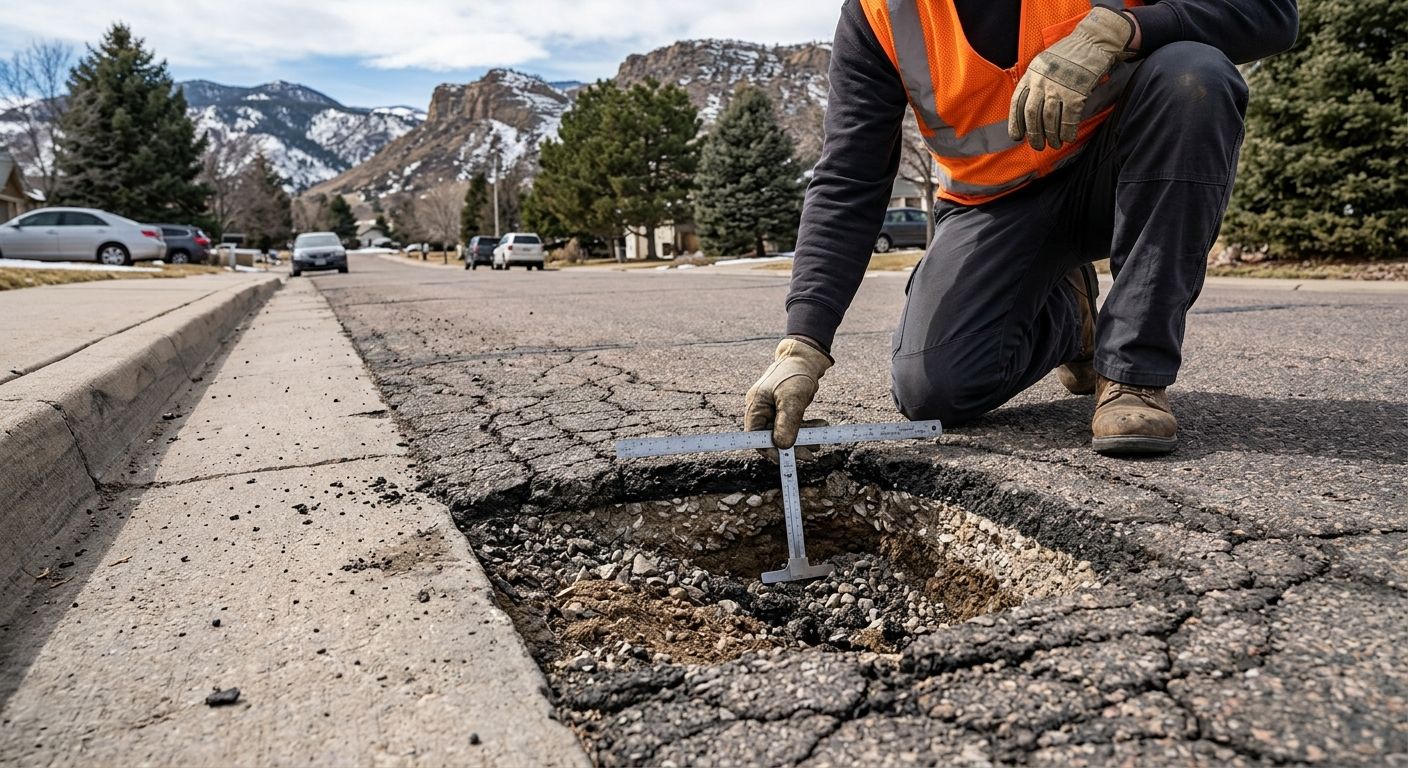
The result is the spiderweb-like cracking pattern known as alligator cracking, followed by full-blown potholes. Once the pavement reaches that stage, patching alone will not save it.
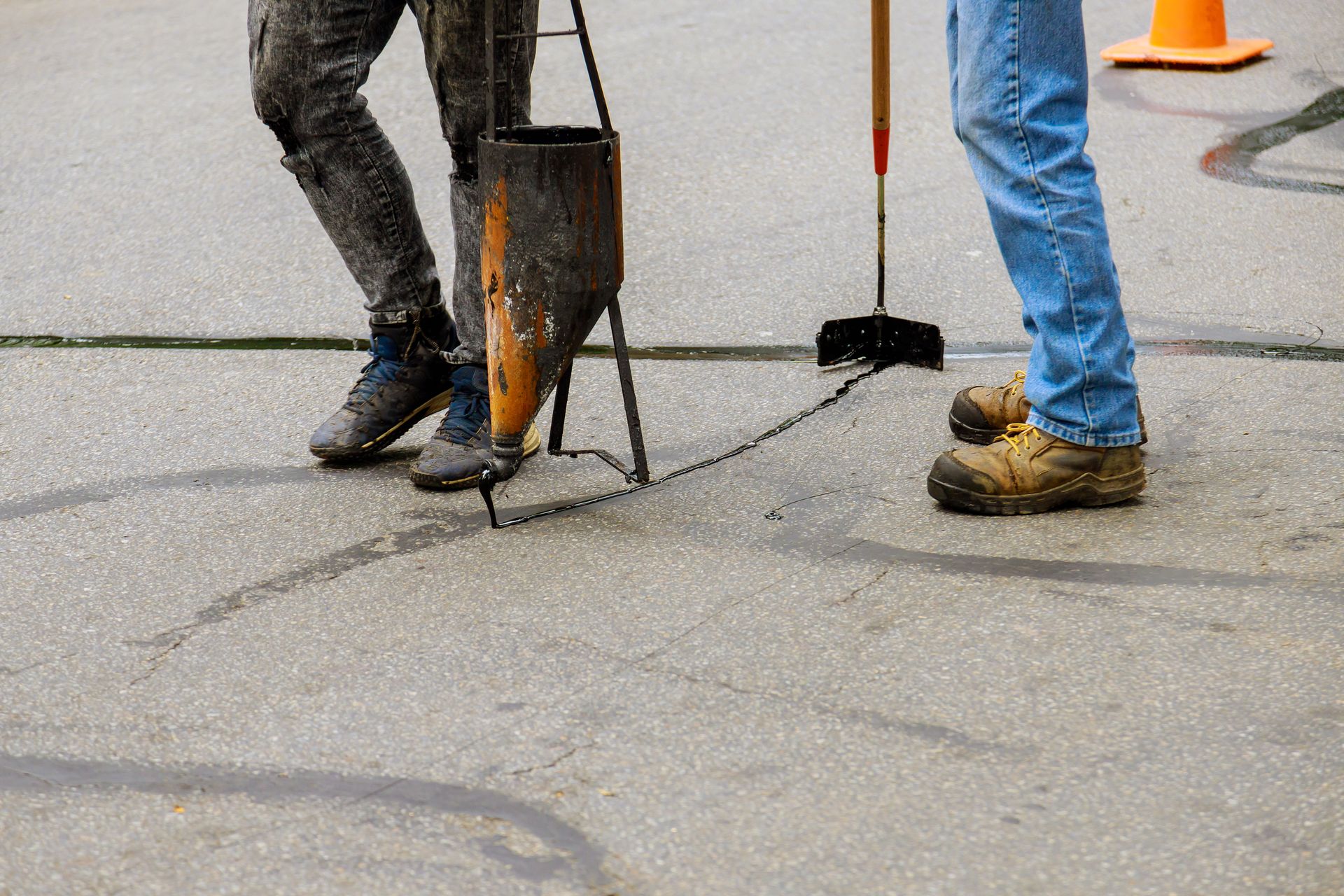
The fix starts with proactive crack sealing before moisture ever gets a foothold, combined with proper drainage design so water does not pool and penetrate in the first place. These are not cosmetic upgrades. They are structural defenses against a very predictable form of failure.
Your Asphalt Is Getting More Sun Damage Than You Think
Castle Rock sits at roughly 6,200 feet above sea level. At that elevation, the atmosphere is thinner, which means UV radiation hits the ground with 15% to 20% more intensity than it does at sea level. That extra UV exposure hits your asphalt just as hard as it hits your skin.
The sun breaks down the bitumen binder, which is the liquid asphalt that holds all the aggregate (the rock and sand) together. As that binder oxidizes, the pavement loses its flexibility, fades from black to gray, and becomes brittle. Brittle asphalt cracks under the stress of vehicle loads and temperature changes far more quickly than healthy, flexible pavement.
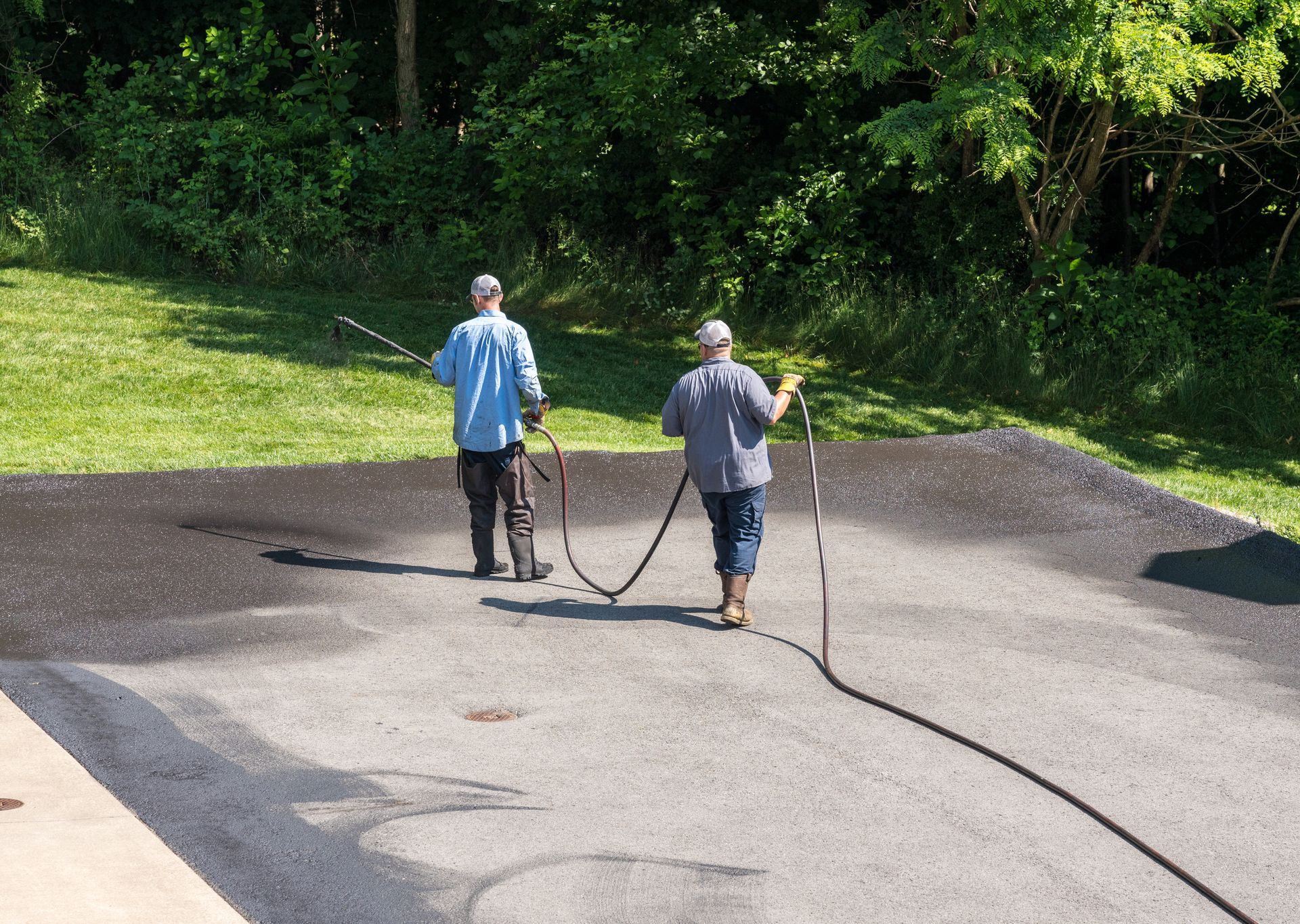
This is exactly why sealcoating is not optional in Castle Rock. It functions as a literal sunscreen for your pavement, blocking UV rays and slowing down the oxidation process. A quality sealcoat applied every two to three years can add years of usable life to a surface that would otherwise deteriorate well ahead of its expected lifespan.
Bentonite Clay: The Ground Beneath Your Feet Is Moving
Here is something most property owners in Douglas County never think about: the soil under their asphalt is actively working against them.
Much of the Castle Rock area is built on soils rich in bentonite clay, a mineral that behaves like a sponge. When it gets wet, it swells aggressively. When it dries out, it contracts. This constant expansion and contraction exerts powerful forces on anything sitting on top of it, and asphalt is not immune. The result is buckling, sinking, and frost heave that no surface repair can permanently correct.
This is why the trend among reputable paving contractors has shifted heavily toward performance-based subgrade engineering. Instead of simply laying asphalt over whatever soil exists, quality contractors over-excavate the problem clay and install a thick, highly compacted aggregate base layer. That base is what actually determines whether your asphalt lasts two years or two decades.
If you ever receive a paving quote that seems significantly lower than everyone else's, ask specifically about the base preparation. Corner-cutting at the subgrade level is the single most common reason well-intentioned paving projects fail years before they should.
Smarter, Greener Paving Options Are Available Right Now
Castle Rock property owners who care about sustainability will be glad to know that the paving industry has made real progress on eco-friendly options that also perform better in local conditions.
Two technologies worth knowing about are Reclaimed Asphalt Pavement (RAP) and Warm-Mix Asphalt (WMA). RAP repurposes old asphalt instead of relying entirely on new petroleum-based materials, which reduces costs and carbon output. WMA takes things a step further by allowing asphalt to be mixed and laid at temperatures 30 to 120 degrees Fahrenheit lower than traditional hot-mix asphalt.
For Castle Rock specifically, WMA has a practical advantage beyond environmental benefits: it stays workable at cooler temperatures, which extends the paving season earlier into spring and later into fall. That flexibility matters a great deal on the Front Range, where the weather can shift dramatically from one week to the next.
If you are planning a
asphalt paving Castle Rock CO project this season, it is worth asking your contractor whether WMA is appropriate for your job.
Frequently Asked Questions (FAQs)
How often should I sealcoat my asphalt driveway in Castle Rock?
Because of Castle Rock's high-altitude UV exposure and harsh freeze-thaw cycles, most residential driveways benefit from sealcoating every two to three years. Waiting longer allows oxidation and surface cracking to accelerate significantly.
Why is my asphalt sinking or buckling even though it was recently paved?
Sinking and buckling are classic signs of subgrade failure, which in Castle Rock is often caused by expansive bentonite clay soil beneath the surface. If the base was not properly prepared with adequate excavation and compacted aggregate, the pavement will move with the soil underneath it.
Can asphalt be paved in cooler Colorado weather?
Yes, particularly with Warm-Mix Asphalt (WMA) technology. WMA can be applied at significantly lower temperatures than traditional hot-mix asphalt, making it well-suited for the Front Range's unpredictable spring and fall weather windows.
What causes alligator cracking on my driveway?
Alligator cracking is typically caused by repeated freeze-thaw cycles driving moisture deeper into the pavement, combined with base layer weakness. Castle Rock's 120 annual freeze-thaw days make this one of the most common forms of pavement failure in the area.
Is a cheaper paving quote ever a good idea?
Not when the savings come from skipping proper base preparation. In Castle Rock's challenging soil conditions, cutting corners on the subgrade almost always leads to early failure that costs far more to repair than the original savings.
Protecting your asphalt in Castle Rock means understanding what is actually working against it, from the clay shifting under your feet to the UV rays hitting from above. The right contractor will account for all of it.
Get a Free Paving Estimate in Castle Rock